


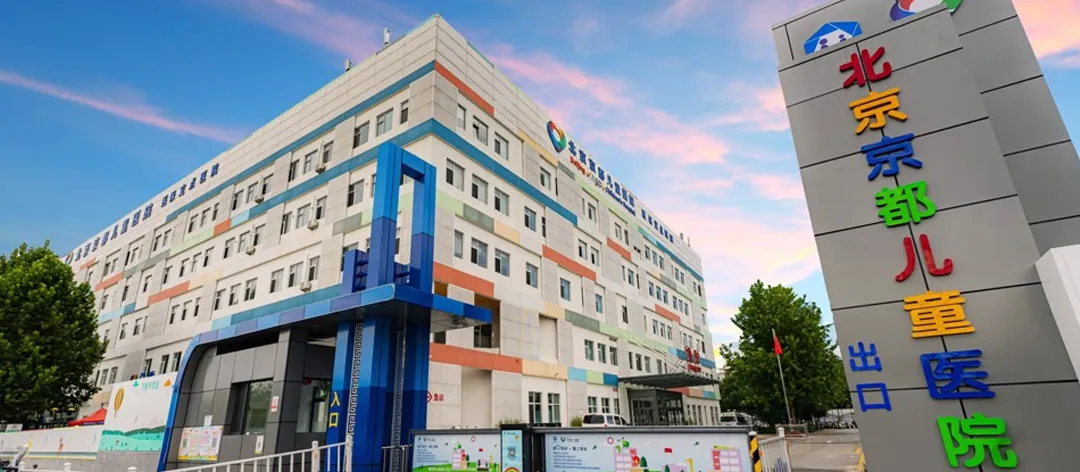
Beijing Jingdu Children's Hospital in Beijing, China, is Beijing's only private Grade A tertiary children's hospital, and the only one in China with JCI accreditation
It has treated children from 100+ countries for conditions including childhood leukaemia, congenital heart disease, thalassaemia, and rare paediatric diseases:
- 900+ paediatric stem cell transplants performed annually
- 99.7% operative success rate for congenital heart disease surgery
- Leukaemia cure rates have risen from 60% to 90% in specific subtypes
For many, it was the first place that offered a protocol their home country could not.
My 1Health is a global medical tourism company, partnered with Beijing Jingdu Children's Hospital to help international families access specialist paediatric care at no additional cost.
We coordinate the treatment plan, visa, travel, and logistics, completely free.
This guide covers what the hospital treats, what it costs, who the specialists are, and what the process of getting there actually looks like.
Not sure where to start? Speak to an international patient specialist now
Why International Families Choose Beijing Jingdu Children's Hospital
Beijing Jingdu performs 900+ stem cell transplants and 2,000+ cardiac surgeries every year. At that volume, the team has seen your child's condition before,.
It earned JCI accreditation in July 2020, becoming China's first private tertiary children's hospital to do so.
JCI sets 272 standards covering infection control, drug safety, patient rights, and clinical processes, the same bar used by leading hospitals in the US, Europe, and the Gulf.
The outcomes speak:
- Leukaemia cure rates: risen from 60% to 90% in specific subtypes
- Congenital heart disease success rate: 99.7%, 85% performed minimally invasively
- Cerebral palsy muscle balance surgery: 89% independent walking rate post surgery
- HLH 5-year survival: 73.7% using the hospital's own modified transplant protocol, published in
Families have travelled from Saudi Arabia, UAE, Bangladesh, Indonesia, Egypt, Australia, Russia, Nigeria, Kenya, Philippines, Kuwait, Myanmar, Vietnam, UK, Germany and more
Conditions Treated at Beijing Jingdu Children's Hospital
The hospital has particular depth in haematology, oncology, cardiac surgery, orthopaedics, and rare diseases.
| Area | Conditions treated |
| Blood cancers & disorders | Leukaemia (ALL, AML), lymphoma, thalassaemia, sickle cell, aplastic anaemia, HLH, CAEBV, rare hereditary blood diseases |
| Solid tumour oncology | Neuroblastoma, hepatoblastoma, Wilms tumour, rhabdomyosarcoma |
| Congenital heart disease | VSD, ASD, tetralogy of Fallot, transposition of the great arteries, complex and neonatal cardiac defects |
| Neurology & rare diseases | SMA (nusinersen available), epilepsy, cerebral palsy, rare genetic and metabolic conditions |
| Orthopaedics | Cerebral palsy surgery (SEMLS), scoliosis correction, hip dysplasia, minimally invasive fracture repair |
| Not offered | Organ transplantation (kidney, liver, heart, lung) |
If your child needs an organ transplant (kidney, liver, heart, or lung), this is not the right hospital.
My 1Health can connect you to specialist transplant centres through our wider network. Contact us, and we will guide you.
Confirm your child's condition is treated here, ask us directly
How Much Does Treatment Cost at Beijing Jingdu? (2026)
Most procedures cost roughly one-third of US or UK prices. Your child's actual cost depends on diagnosis, protocol, and stay length.
| Procedure | From (USD) |
| Allogeneic BMT (excl. donor) | $70,000 |
| Autologous BMT | $30,000 |
| CD19 CAR T cell therapy | $140,000 |
| Chemotherapy, full course | $30,000 avg |
| Radiotherapy, full course | $13,000 |
| Heart surgery: ASD or VSD repair | $10,000 |
| Cerebral palsy surgery | $20,000 |
| Liver tumour resection | $15,000 |
| Hemangioma procedure | $10,000 |
| SMA: nusinersen per dose | $7,600 |
| Consultation | $120-140 |
| Second medical opinion | $500 |
| Online video consultation | $100 |

The US comparison: Allogeneic BMT in the US: USD 300,000-1,000,000. At Beijing Jingdu: from USD 70,000.
SMA treatment: Nusinersen per dose in the US: USD 125,000. At Beijing Jingdu: approx. USD 7,600.
Insurance: Cigna, Allianz Partners, AIA, MSH International, Generali China Life, MediLink Global, ERGO, and ICBC AXA Life Insurance are accepted.
The Specialist Doctors Who Lead Treatment
These are the people who will be responsible for your child's care.
1. Professor Sun Yuan- Director & Head of Haematology and Oncology
Her team achieves an 80-90% cure rate in haematopoietic stem cell transplantation.
She performed China's first autologous cord blood transplant for severe aplastic anaemia in 2009; that patient had normal blood function confirmed at the 10 year follow up.
2. Professor Wu Minyuan, Haematology Clinical Lead
Holds the Expert with Special Contribution designation from China's State Council, one of the highest individual honours in Chinese medicine.
Over 2 decades treating leukaemia, HLH, and bone marrow failure.

3. Dr Yang Xueyong, Head of Cardiac Surgery
6,000+ cardiac surgeries, 3,000+ as lead surgeon. 97% 5-year survival for complex congenital heart disease. Trained at Boston Children's Hospital in 2016.
His minimally invasive approach has been adopted by Japan's Juntendo University Hospital and is the basis for the first Arabic cardiac surgical training centre in Cairo.
4. Chief Physician Chou Xiaobing, Orthopaedics
4,000+ paediatric orthopaedic surgeries. Complication rate under 5%.
Ask a specialist to review your child's case before you travel
Families Who Have Been Where You Are Now
These cases come directly from Beijing Jingdu Children's Hospital's own clinical records and published case documentation.
1. The Australian Boy with ETP ALL
ETP ALL (early T cell precursor acute lymphoblastic leukaemia) is one of the rarest and most treatment-resistant subtypes of childhood leukaemia.
The 5-year survival rate after relapse is below 10%.
A 15-year-old from Australia had exhausted every treatment option available domestically.
His oncology team had no further standard protocols to offer. His family began researching internationally and arrived at Beijing Jingdu Children's Hospital.
The haematology team placed him on a modified haploidentical transplant protocol.
Engraftment, the point at which the donor's stem cells begin producing healthy blood cells, occurred on day 12 post-transplant, ahead of the 15-20 day window.
His case is one of a small number of documented ETP ALL outcomes following haploidentical HSCT and is referenced in the hospital's own case materials as an example of the Beijing Protocol's reach into treatment-resistant presentations.
2. The Southeast Asian Child Who Had Tried Everywhere
A child from Southeast Asia with relapsed acute leukaemia had received treatment at hospitals in multiple countries before arriving at Beijing Jingdu Children's Hospital.
Each prior treatment had failed to achieve sustained remission.
The hospital's haematology team reviewed the full treatment history and developed a protocol that sequenced CAR T cell therapy followed by haploidentical bone marrow transplant.
This combined approach used specifically for cases where leukaemia cells have become resistant to standard chemotherapy.
The disease was brought under control. The child's family remained in Beijing for the monitoring period and returned home with a structured follow up plan.
This case is documented on the hospital's official site as an example of the centre's approach to cases that have failed treatment elsewhere, across families arriving from Southeast Asia, the GCC, and Africa.
3. The African Child with Congenital Heart Disease
An African child with a congenital heart defect underwent high complexity cardiac surgery at Beijing Jingdu Children's Hospital.
The surgical team, led by the cardiac unit, performed the repair using the hospital's minimally invasive right subaxillary approach.
Postoperatively, the child recovered full cardiac function. The case is cited in the hospital's own clinical documentation as representative of the centre's international cardiac surgery outcomes.
This corridor, African families travelling to Beijing for congenital heart disease surgery that is not available in their home country, is one the hospital actively supports.
Is your child's condition one we can help with? Ask us now

4. The Infant Liver Tumour: Hepatoblastoma at 3 Months
The youngest documented hepatoblastoma case operated on at Beijing Jingdu Children's Hospital was an infant aged three months old.
Hepatoblastoma at this age requires a surgical approach that accounts for the infant's weight, vascular anatomy, and blood volume.
The hospital's oncology surgery team, which holds a verified 95.2% R0 resection rate across multifocal cases, performed the liver tumour resection using a 50-minute precision protocol that keeps blood loss low enough to operate safely in very young patients.
The infant's case is referenced in the hospital's own surgical programme documentation as a marker of the team's operating range for high-risk paediatric oncology surgery.
5. A Family from the GCC: Thalassaemia and No Matched Donor
Thalassaemia major requires lifelong blood transfusions unless a bone marrow transplant successfully replaces the defective stem cells.
For families from the GCC, finding a fully matched unrelated donor is significantly harder than in countries with larger donor registries.
A family from the Gulf arrived at Beijing Jingdu Children's Hospital with a child diagnosed with beta thalassaemia major. No matched donor had been identified after an extended search.
The haematology team offered haploidentical transplant using the Beijing Protocol, with a parent as the donor.
The transplant proceeded, and the child achieved autonomous haemoglobin synthesis, the clinical marker that confirms the transplant has worked and regular transfusions are no longer needed.
Their case reflects a corridor the hospital treats consistently: GCC families for whom the haploidentical approach is the only viable path to a cure.

The Beijing Protocol: Can My Child Get a BMT Without a Matched Donor?
The answer: yes. The Beijing Protocol allows a parent to be the donor. A parent is always 50% matched. That is enough.
Most families arrive here after being told no matched unrelated donor was found. Through international registries, that search can take 12-18 months, and for families from the GCC, Bangladesh, Southeast Asia, or much of Africa, it often ends without a result.
What the Beijing Protocol does: It enables a bone marrow transplant using a half-matched (haploidentical) donor, a parent, sibling, or close relative.
The protocol uses specific immune management to prevent rejection. Donor identification takes as little as 14 days.
At Beijing Jingdu Children's Hospital, it has:
- Reduced transplant-related mortality to below 8%
- Reduced acute GVHD (where donor cells attack the recipient's body) from 40-60% in earlier approaches to 15%
- Achieved a 58% 5-year disease-free survival rate when combined with CD19 CAR T therapy in resistant leukaemia
It is not experimental. The Beijing Protocol is now incorporated into transplant guidelines in both the United States and the United Kingdom.
For a deeper comparison of paediatric BMT options in China, read our article on paediatric bone marrow transplant in China.
Ask us whether your child qualifies for haploidentical BMT at Beijing Jingdu
Language, Visa, and Logistics: What International Families Need to Know
Most families asking this question want the same thing: a clear picture of what is handled for them, and what they have to figure out themselves.
| Language | English, Japanese, Russian. Arabic on request. |
| Visa | Hospital invitation letter for China medical (M) visa. My 1Health handles the paperwork. |
| Airport transfers | Pickup and drop-off both ways. Green channel for urgent admissions. |
| Accommodation | 16 international family wards. Parents can stay in the room. Hotels nearby from ¥84/night. |
| Ward | Halal meals available. Free Wi Fi, laundry, fridge, microwave, voltage converters. |
| Insurance | Cigna, Allianz, AIA, MSH International, MediLink Global, ERGO, ICBC AXA, Generali. Direct billing available. |
| Payment | Bank transfer, Alipay, cash (CNY). No hidden fees. Same price as going directly. |
| After discharge | Full records in English and Chinese. Free medicine mailing. Remote follow-up coordinated by My 1Health. |
We take care of everything, so you can focus on getting better
Trusted by Millions Seeking World-Class Treatment
 Instant visa letter
 Flight bookings
 Airport pickup
 Accommodation
 24/7 support
How to Get Your Child Started at Beijing Jingdu Children's Hospital
5 steps. My 1Health coordinates every one of them.
- Send your child's reports. Diagnosis, imaging, biopsy results, prior treatment. WhatsApp or email. The more detail, the faster the assessment.
- The hospital's specialist team reviews the case. The relevant department's multidisciplinary team reviews, not a general coordinator. Written assessment in 24-48 hours.
- You receive a treatment plan and cost estimate. Specific to your child's condition, stage, and protocol. No vague ranges.
- My 1Health coordinates the rest. Visa letter, flight planning, accommodation, airport transfer, dedicated coordinator throughout treatment.
- We follow up after you return home. Full records in English and Chinese. Free medicine mailing. My 1Health stays your point of contact.
WhatsApp: +1 718 550 0880
Email: [email protected]
Same price guarantee: you pay exactly what you would pay going directly to the hospital. Nothing extra.