



A bone marrow transplant abroad takes between 4 and 16 weeks in country, depending entirely on your transplant type.
The bone marrow transplant abroad timeline splits into two fundamentally different journeys and knowing which one you are planning changes everything.
Autologous patients use their own stem cells and spend 4 to 6 weeks in country.
Allogeneic patients receive donor cells and need 10 to 16 weeks minimum; most cannot fly home safely for up to six months after transplantation.
- The World Marrow Donor Association reports that 50,000+ haematopoietic stem cell transplants are performed globally each year.
- In India, autologous BMT starts from USD 15,000 compared to over USD 577,000 in the United States, according to 2025 Milliman cost data.
- At JCI accredited centres in Turkey and India, international patients can begin pre transplant evaluation within days of arrival.
My 1Health is a global medical tourism company, partnered with leading BMT centres across India, Turkey, Thailand, South Korea, Malaysia, and China to connect international patients with the right transplant programme at no additional cost.
Our Patient team handles medical records review, hospital matching, visa letters, companion accommodation, and aftercare coordination, from first inquiry to final follow up at home.
Talk to a BMT Patient Advisor today!
This guide covers:
- Week by week timeline for transplant types
- What changes when the patient is a child
- Full costs beyond the hospital quote
- Honest guidance on which destinations to consider and why
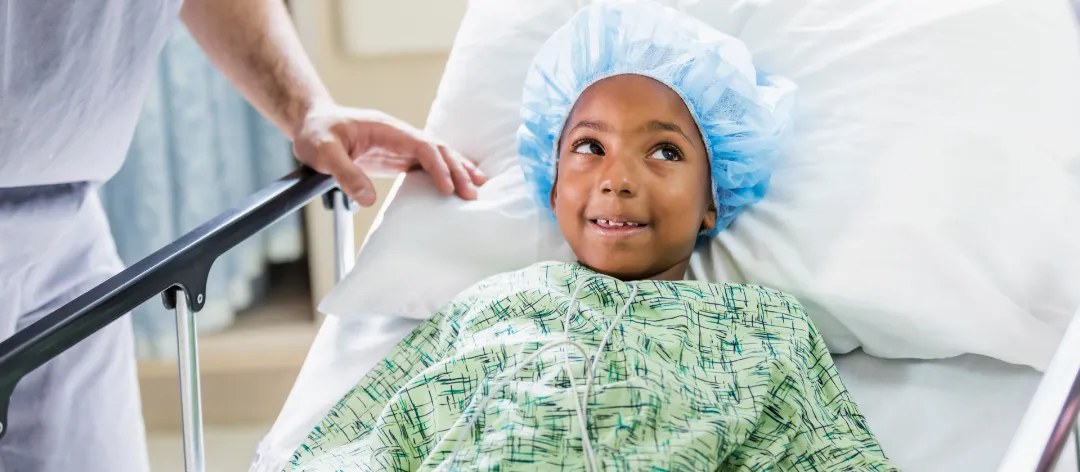
How Long Does a Bone Marrow Transplant Abroad Take?
The total time away is much longer than the hospital stay. Most patients focus on the admission, 21 to 36 days.
What they miss is the mandatory post discharge monitoring period, during which the transplant team tracks engraftment (the process by which new stem cells settle into the bone marrow and produce blood cells).
For autologous BMT, the full in country commitment runs 4 to 6 weeks. For allogeneic BMT, the minimum is 10 to 16 weeks, with commercial flying restricted for up to 6 months post-transplant.
These timelines follow clinical protocols published by the National Marrow Donor Program (NMDP), which defines Days 0 to 100 as the critical post transplant monitoring window.
| Transplant Type | Hospital Stay | Post Discharge Monitoring | Total In Country |
|---|---|---|---|
| Autologous (own cells) | 21–28 days | 1–2 weeks near the hospital | 4–6 weeks |
| Allogeneic – matched sibling/related | 28–42 days | 4–8 weeks near the hospital | 10–14 weeks |
| Allogeneic – unrelated/haploidentical | 35–60 days | 6–8 weeks near the hospital | 12–16 weeks |
How My 1Health Supports You at Every Stage of Your BMT Journey
We have coordinated more than 53,000 patient cases from 95 countries since 2018, a significant number of them BMT, oncology, and transplant cases where coordination errors are not recoverable.

Here is what our team does at every stage.
Before you travel
- A dedicated Patient Support Specialist is assigned to you 24/7 to ease concerns
- Medical reports are reviewed within 2-3 business days.
- Initial cost estimate provided, specific to your transplant type, diagnosis, and destination.
- Hospital matched to your case, budget, and origin corridor.
- Formal treatment plan and written cost estimate obtained from the hospital.
- Visa invitation letter arranged. Medical visa checklist provided.
- Accommodation recommended within 15 to 20 minutes of the hospital, guesthouses or verified serviced apartments used by previous patients.
During your hospital stay
- Language support arranged where needed by hospital.
- For allogeneic cases: real time coordination if a GvHD episode or infection requires adjusted medication or extended care.
- Family kept informed at each stage. We do not disappear after you arrive.
Post discharge, before flying home
- Outpatient accommodation and transport to follow up clinic visits are arranged.
- Ongoing medication sourcing during the post discharge monitoring period.
- For allogeneic patients approaching Day +100: complete aftercare protocol prepared and forwarded to home haematologist before departure.
After you return home
- Follow up at 2 weeks, 6 weeks, and 3 months post-return.
- Confirmation that aftercare is in place with your home haematologist
- Any post transplant questions addressed, your case does not close when you leave.
Same price guarantee: Every patient pays the same treatment cost as going directly to the hospital. We provided facilitation services for free. No mark up. No hidden facilitation fee.
Autologous vs Allogeneic BMT: What Is the Difference?
Your transplant type determines your timeline, your costs, your donor logistics, and your recovery path. Getting this wrong is the most expensive planning mistake we see.
What is an autologous bone marrow transplant?
In autologous BMT, your own stem cells are collected before high dose chemotherapy, then reinfused to rebuild your blood system. No donor is needed.
There is no risk of graft-versus-host disease (GvHD). The condition where donor immune cells attack the recipient's body.
Used for: multiple myeloma, Hodgkin's lymphoma, non- Hodgkin's lymphoma, and some solid tumours.
In country: 4 to 6 weeks. Lower complication rate. Better option for patients who need to return to work or family responsibilities quickly.
What is an allogeneic bone marrow transplant?
In allogeneic BMT, stem cells come from a donor, ideally a matched sibling (roughly 25% of siblings are a full HLA match), or a matched unrelated donor via international registries.
A haploidentical transplant uses a half-matched donor, usually a parent or child, and is increasingly used when no full match is available.
Used for: acute leukaemia (AML, ALL), aplastic anaemia, myelodysplastic syndrome (MDS), sickle cell disease, thalassemia, and conditions where the graft versus tumour effect adds clinical value.
In country: 10 to 16 weeks minimum. The immune system must be fully suppressed before transplant, and the new immune system takes 3 to 12 months to reconstitute.
According to Cancer Research UK, patients should avoid flying for at least six months post transplant, a restriction many families only discover after planning their return journey.

Autologous Bone Marrow Transplant Timeline: Week by Week
Total in country: 4 to 6 weeks. Based on cases we have coordinated at BLK Max Super Specialty Hospital, Delhi, Yashoda Hospitals, Hyderabad, Anadolu Medical Center, Gebze, and Liv Hospital, Istanbul. Individual timelines vary by diagnosis and conditioning regimen.
| Phase | Timing | What Happens |
|---|---|---|
| Pre-arrival | 2–4 weeks before travel | Reports submitted. Hospital confirms conditioning regimen. Visa arranged. Flights and accommodation booked. |
| Stem cell mobilisation | Days -14 to -5 | Growth factor injections stimulate stem cells into the bloodstream. Cells collected via apheresis and stored for re-infusion. |
| Conditioning chemotherapy | Days -7 to -1 | High-dose chemotherapy destroys existing bone marrow. Patient is hospitalised. Nausea, fatigue, and low blood counts are expected. |
| Transplant Day (Day 0) | Day 0 | Stored stem cells re-infused via IV. Takes 1 to 4 hours. Patient remains in hospital. |
| Engraftment | Days +10 to +21 | New stem cells migrate to the bone marrow and begin producing blood cells. Blood counts monitored daily. Infection risk is highest in this window. |
| Hospital discharge | Days +21 to +28 | Discharged once blood counts recover, and the patient can take oral medications. Must remain near the hospital. |
| Outpatient monitoring | Weeks 4 to 6 | Clinic visits 2 to 3 times per week. Blood tests, medication review, and monitoring for complications. |
| Safe to fly | Week 6 to 8 | Treating team issues with travel clearance. Full discharge summary provided. |
Days +7 to +14 are the hardest part for most patients. Blood counts are at their lowest. Fatigue is severe. Isolation in a single room feels endless.
Every patient we have supported through this phase has said the same thing afterwards: knowing it was temporary made it bearable.
The counts start rising, usually by Day +12 to +16, and when they do, everything shifts.

Allogeneic Bone Marrow Transplant Timeline: Week by Week
Total in-country: 10 to 16 weeks. This is longer than most families expect, and the gap between expectation and reality is wider here than for any other transplant type.
| Phase | Timing | What Happens |
|---|---|---|
| Pre-arrival | 4–8 weeks before travel | HLA typing for the patient and the donor. Donor medical clearance. Conditioning regimen selected. Visa, flights, and accommodation arranged. |
| Donor stem cell collection | Days -2 to -1 | The donor undergoes peripheral blood stem cell collection or bone marrow harvest under general anaesthesia. The donor must travel to the transplant centre. |
| Conditioning chemotherapy | Days -7 to -1 | Intensive chemotherapy, sometimes combined with total body irradiation, to destroy the patient's immune system and create space for donor cells. Patient is hospitalised. |
| Transplant Day (Day 0) | Day 0 | Donor stem cells are infused via IV. Takes 1 to 6 hours. |
| Engraftment and GvHD monitoring | Days +10 to +30 | Engraftment begins Days +10 to +21 for peripheral blood stem cells. GvHD monitoring starts immediately. Immunosuppressive drugs (tacrolimus, cyclosporine) are administered. |
| Critical monitoring window | Days +30 to +100 | Highest-risk period. Daily to weekly outpatient visits. Blood counts, GvHD assessment, infection screening, and chimerism testing. Patient must remain near the hospital for the full 100 days. |
| Post-100-day assessment | Day +100 | Formal disease assessment. GvHD status reviewed. Reduced clinic frequency if stable. Some patients qualify for early departure planning. |
| Safe to fly | 6 months minimum | Immune reconstitution is still incomplete. Early flying risks life-threatening infection. Formal clearance required from the transplant team. |
Families who manage a 12 to 16 week allogeneic stay well are the ones who plan companion rotations in advance, tell their employer the real timeline before leaving, and budget for the outpatient period.
If you have not done this planning yet, that is exactly what our team helps with.

Bone Marrow Transplant Abroad for Children: What Parents Need to Know
Paediatric BMT follows the same clinical phases as adult BMT, but the protocols, isolation requirements, and planning logistics are different.
If your child has been recommended for a transplant, this section gives you the specific information you need before making any decisions.
How paediatric BMT is different from adult BMT
Children use age adjusted conditioning protocols and paediatric-specific immunosuppressive regimens. These are not adult doses scaled down.
Isolation requirements are stricter. Paediatric BMT rooms are negative-pressure single rooms. One parent can stay in the room. Siblings generally cannot visit during the engraftment window (Days 0 to +30).
Questions parents ask before they travel
Can both parents come?
Yes. One parent stays in the isolation room with the child. The second parent can stay in adjacent accommodation.
Most of our partner BMT centres have guesthouses or verified serviced apartments within 15 minutes of the hospital. For families with one travelling parent, we plan a companion handover in Weeks 4 to 6.
What about school?
Most children miss 3 to 6 months of school. International hospitals in India, Turkey, and South Korea have hospital teachers or digital schooling access.
We connect families to these before departure, not after the child has spent three weeks with nothing to do during isolation.
What about siblings left at home?
Planned connection matters. Scheduled daily video calls, voice notes, and small care packages help maintain contact. It does not replace being there, but it helps more than families expect before they try it.
Best hospitals for paediatric BMT abroad
| Hospital | Location | Why for Paediatric BMT |
|---|---|---|
| Beijing Jingdu Children's Hospital | Beijing, China | Dedicated paediatric haematology. Specialist BMT beds for international children. Competitive costs (USD 25,000–55,000). |
| Samsung Medical Centre | Seoul, South Korea | Newsweek World's Best Hospitals 2025. Paediatric oncology and BMT. Haploidentical expertise. |
| BLK-Max Delhi (Max Healthcare) | Delhi, India | Highest BMT volume in North India. Dedicated paediatric BMT unit. Strong international patient department. |
| Rainbow Children's Hospital | Hyderabad, India | India's leading paediatric specialist. Dedicated BMT programme across multiple cities. High volume of East and West African paediatric cases. |
| Anadolu Medical Center | Gebze, Turkey | Johns Hopkins-affiliated. JCI-accredited. Paediatric oncology unit. Fast international intake. |

Best Countries for Bone Marrow Transplant Abroad (2026)
The right destination depends on your transplant type, budget, origin country, and for allogeneic cases, whether a donor travels with you.
Below is an honest breakdown of each destination, who it is right for, and where it falls short.
Bone marrow transplant in India
Best for: African and South Asian patients. Autologous from USD 15,000. Allogeneic from USD 22,000 to USD 50,000.
- BLK-Max Super Specialty Hospital, Delhi — the highest BMT volume in North India. Experienced with patients from Nigeria, Kenya, Bangladesh, and the Gulf.
- Yashoda Hospitals, Hyderabad — strongest recommendation for haploidentical donor cases. Some of the fastest donor processing times in the country.
- Kokilaben Dhirubhai Ambani Hospital, Mumbai, and Apollo Hospital Delhi — premium tier with higher service levels.
Honest note: Queue times at the most popular centres can run 2 to 4 weeks. We coordinate pre-admission assessment digitally before travel to reduce this.
Bone marrow transplant in Turkey
Best for: West African patients. Autologous from USD 30,000. Allogeneic from USD 50,000 to USD 90,000.
- Anadolu Medical Center, Gebze; JCI-accredited, Johns Hopkins Medicine International-affiliated. Strong haploidentical BMT programme.
- Liv Hospital Istanbul; dedicated BMT unit. International coordinators in English and Arabic.
Honest note: Turkey's particular strength is haploidentical transplantation. If a fully matched donor is unavailable, Turkish haematologists have significant published experience with T-cell replete haploidentical protocols.

Bone marrow transplant in Thailand
Best for: GCC and Southeast Asian patients prioritising English-language care. Autologous from USD 50,000.
- Bumrungrad International Hospital, Bangkok — 500,000+ international patients annually from 190+ countries. One of the most experienced international facilities in the world.
Honest note: Higher cost than India or Turkey. Justified for patients requiring subspecialty depth or a higher-service experience.
Bone marrow transplant in South Korea
Best for: complex, relapsed, or refractory cases. Autologous from USD 60,000. Allogeneic from USD 90,000.
- Samsung Medical Centre Seoul -Newsweek World's Best Hospitals 2025. One of the highest BMT volumes in Asia. Access to CAR-T therapies and clinical trials.
Honest note: Not the right choice for straightforward autologous BMT. The premium is justified only for high-risk or refractory cases where outcomes data matters.
Bone marrow transplant in China, Malaysia, and Singapore
- Beijing Jingdu Children's Hospital (Beijing)- dedicated international paediatric BMT programme. Costs USD 25,000 to USD 55,000. Best for East and Southeast Asian families.
- Sunway Medical Centre and Beacon Hospital, Selangor (Malaysia)- English-language care. Autologous from USD 40,000. Shorter travel for Southeast Asian patients.
- Raffles Hospital and Icon Cancer Centre (Singapore)- premium BMT from USD 100,000. Justified for complex paediatric or refractory cases.
Not sure which country is right for your case? Send your reports, and we will give you a specific recommendation within 24 hours.

Bone Marrow Transplant Abroad: Full Cost Breakdown (2026)
The hospital quote is not the full cost. It covers the procedure, hospital stay, and in-hospital medications. It does not cover the weeks between discharge and flying home.
For a 10-week allogeneic case, that gap adds USD 8,000 to USD 20,000 to your total spend.
| Cost Item | Autologous (4–6 weeks total) | Allogeneic (10–16 weeks total) |
|---|---|---|
| Hospital procedure and stay | USD 15,000–55,000 | USD 22,000–90,000 |
| Companion flights (return) | USD 400–1,800 | USD 400–1,800 (x2 if companion rotates) |
| Accommodation near the hospital | USD 1,500–4,000 | USD 5,000–12,000 |
| Donor travel and accommodation | N/A | USD 800–3,500 (related donor) |
| Unrelated donor search fee | N/A | USD 2,000–8,000 (WMDA registry) |
| Outpatient medications post-discharge | USD 500–1,500 | USD 2,000–6,000 (immunosuppressants) |
| Local transport to the outpatient clinic | USD 300–800 | USD 800–2,500 |
| Visa extension if needed | Usually not required | USD 100–400 per extension |
| Total estimated all-in budget | USD 18,000–65,000 | USD 32,000–125,000 |
Ranges based on case data from India, Turkey, Thailand, and South Korea from 2023 to 2026. Lower end applies to straightforward cases in India.
Upper end applies to complex allogeneic cases at premium centres in South Korea or Singapore.
How your origin country affects your budget
- Nigerian families: Naira depreciation makes long stays costly. Convert funds to USD or the destination currency before departure. Families who convert in tranches during a 12-week allogeneic stay can lose 20 to 30% of the Naira equivalent. Convert early.
- Kenyan families: Direct Nairobi to Delhi and Nairobi to Mumbai routing. Economy return flights run approximately USD 700 to 900. For long stays, open-ended tickets avoid expensive rebooking when timelines extend.
- UK patients: NHS wait times are the primary motivation. An allogeneic BMT in India costs USD 35,000 to 50,000 all-in, against an NHS wait that can add months to a time-sensitive diagnosis.
Want a personalised total cost estimate for your transplant type and destination? Message us with your diagnosis and transplant type.

Before You Travel: BMT Preparation Checklist
Most delays we see in BMT journeys are preventable — missing documents, incomplete donor clearance, and accommodation booked too far from the hospital. Use this before you confirm your travel date.
Medical preparation
- Full haematology reports from the last 90 days — bone marrow biopsy results, full blood count, cytogenetics report if applicable
- Transplant type confirmed in writing by your treating haematologist
- HLA typing completed for patient and donor (allogeneic only)
- Donor medical clearance obtained and documented (allogeneic only)
- Pre-transplant cardiac and pulmonary function tests completed (required by most BMT centres)
- Dental clearance obtained (active dental infections can delay conditioning start)
- Current medications list prepared — include brand names and generic names
Administrative preparation
- Medical visa obtained with adequate duration (allow 6 months for allogeneic patients)
- Hospital admission letter received from the treating centre
- Travel insurance confirmed — specifically check whether BMT abroad and medical evacuation are covered
- Foreign currency prepared or conversion plan in place (see currency guidance in the costs section above)
- Power of attorney or consent forms signed if a companion will make medical decisions
Logistics preparation
- Accommodation booked within 15 to 20 minutes of the hospital
- Companion's own travel documents, insurance, and visa arranged
- For parents of children: school notification sent, digital schooling access arranged if possible
- For allogeneic patients: companion handover plan discussed with family at Week 6 to 8
- Trusted contact at home briefed on full timeline and emergency contact protocol
If any item on this checklist is unclear, our Patient Support team can help you work through it.

Have a question not covered here? Ask our team directly on WhatsApp — we respond the same business day.