



Choosing spine surgery abroad is easiest when you can see the full plan in one view: the medical pathway, the budget range, the expected length of stay, and how follow up care works once you return home.
This guide is for international patients considering spine surgery in India for procedures such as microdiscectomy, decompression (laminectomy), spinal fusion, disc replacement, or more complex spine correction.
You’ll find practical budgeting in USD, realistic recovery timelines, and a list of leading hospitals across Delhi NCR, Mumbai, Chennai, Bengaluru, and Hyderabad.
Throughout the process, My 1Health can coordinate the journey end to end medical review, hospital selection, cost estimate clarity, travel planning, on ground logistics, and aftercare planning so decisions are made with confidence and everything runs on a schedule.
Get a clear spine surgery plan for India from a My 1Health patient coordinator

The Two Part Budget: Treatment Cost + Travel Cost
Spine surgery budgeting becomes clear when you separate costs into two categories.
Treatment Costs
Primary costs usually include consultation, tests, the procedure, surgeon and anaesthesia fees, operating theatre charges, implants if needed, hospital stay, medicines during admission, and initial physiotherapy.
Travel and Living Costs
Secondary costs include flights, medical visa, accommodation near the hospital, meals, local transport, companion costs, and a buffer in case you stay longer than planned.
A good plan covers both, with one total figure that you can compare across hospitals and cities.
Get your full treatment + travel budget in USD
Typical Spine Surgery Costs in India (in USD)
Costs vary by diagnosis, complexity, number of spine levels involved, implant choice, and length of hospital stay.
The ranges below are for early planning and are best used to shortlist options before requesting a written estimate.
Planning ranges by procedure
| Procedure | Typical planning range in India (USD) | Often recommended for |
| Consultation + work up | Varies by case | Initial evaluation and plan |
| Microdiscectomy/Discectomy | $1,700 – $3,900 | Disc herniation with nerve pain |
| Laminectomy/Decompression | $2,200 – $3,900 | Spinal stenosis/nerve pressure |
| Spinal fusion (single to more complex) | $3,300 – $5,600+ | Instability/degeneration/deformity |
| Artificial disc replacement | $4,400 – $6,600 | Selected motion preservation cases |
Get a comprehensive treatment cost estimate for your spine procedure (USD)

What a Good Hospital Estimate Should Include
A clear written estimate makes travel decisions simple. When you request a quote, ask for the estimate to be structured and itemised, so it’s easy to compare options.
Request these items in writing
- The exact procedure name and whether it is minimally invasive or open
- The number of levels involved (single vs multi-level)
- Implant/hardware range, including options by category
- The room type included in the estimate
- Whether ICU/step down is included and under what conditions
- The expected length of stay and what changes if you stay longer
- Inclusions and exclusions (medicines, follow-up visits, physiotherapy sessions)
A practical budgeting rule
Plan a 10 – 20% buffer on the medical quote, mainly to cover implant variation and length of stay extension. This buffer is not a “problem expectation” it’s a smart way to keep your plan flexible and stress-free.
Request an itemized spine surgery quote (India)

Full Travel Budgeting by City (Food, Local Transport, and Rent Indicators)
Your travel budget depends on where you’re treated and how long you stay. For a short procedure, you may plan a shorter stay; for fusion or multi-level procedures, you may stay longer for follow-up clearance.
The city indicators below help compare day-to-day costs. They are not hotel prices, but they are useful for planning.
City cost snapshot (approximate, USD)
| City | Meal (inexpensive) | Local transport (one way) | Taxi start | 1 bedroom rent (city centre/month) |
| Delhi (NCR) | ~$5.50 | ~$0.45 | ~$0.90 | ~$270 |
| Gurugram | ~$5.50 | ~$0.55 | ~$1.10 | ~$320 |
| Mumbai | ~$5.50 | ~$0.20 | ~$0.35 | ~$680 |
| Chennai | ~$2.20 | ~$0.35 | ~$1.55 | ~$185 |
| Bengaluru | ~$3.30 | ~$0.55 | ~$1.10 | ~$330 |
| Hyderabad | ~$3.00 | ~$0.55 | ~$0.85 | ~$220 |
Secondary costs many patients forget (small items that add up)
- Airport transfers and mobility assistance
- SIM card and stable data for tele follow-ups and navigation
- Local pharmacy trips and imaging centre transport
- Extra physiotherapy sessions after discharge
- Accessibility items (brace, walker), laundry, and comfort essentials
- Companion living costs, especially if they stay for the full trip
Flights: a simple way to plan
Airfares change daily, so the best approach is to compare routes and dates early, then book once your medical schedule is confirmed.
It helps to arrive 1 – 3 days before major procedures for pre-operation tests and rest, and to avoid tight connections when returning home.

Recovery Time and How Long to Stay in India
Recovery planning is easier when you think in stages: safe walking, wound care, physiotherapy progression, and medical clearance for travel.
Typical spine surgery recovery timelines (high level)
| Procedure | Typical hospital stay | Return to basic routine | Full recovery (common range) |
| Microdiscectomy | 1 – 2 days | 1 – 4 weeks | Several weeks |
| Decompression (laminectomy) | 1 – 2 days | 4 – 6 weeks | Weeks to months |
| Spinal fusion | 2 – 4 days | 6 – 12 weeks | Several months to a year |
Typical in country stay planning
- Microdiscectomy/decompression: many patients plan 2 – 3 weeks in India to cover evaluation, surgery, and follow up clearance.
- Fusion (especially with implants): many patients plan 3 – 5+ weeks, depending on surgeon preference and recovery pace.
Travel timing should always follow your surgeon’s clearance and a clear plan for mobility support, medications, and wound protection.
Aftercare planning that makes travelling home smooth
- A written rehab plan with simple daily goals
- A medication list with refill strategy (or equivalent alternatives)
- Wound care instructions and clear warning signs explained simply
- A follow-up plan once home (tele follow up where appropriate)

Best Hospitals for Spine Surgery in India
The hospitals below are widely chosen by international patients because they combine specialist spine surgery with strong diagnostics, state of the art technology, ICU support, and structured rehabilitation.
Apollo Hospitals (New Delhi, Chennai, Bengaluru, Hyderabad, Mumbai)
Spine surgeries commonly treated
Apollo Hospitals typically manage the full spectrum of spine care, including disc problems (such as microdiscectomy), decompression procedures, spinal fusion, deformity correction, trauma, and complex reconstructions where needed.
Technology and minimally invasive options
Apollo is known for investing in minimally invasive spine surgery (MIS) and image-guided navigation. In selected centres, Apollo also offers robotic guidance designed specifically for spine surgery, which supports accuracy in complex fixation and deformity procedures.
Multidisciplinary care
Apollo’s strength is its broad multi-specialty environment. Patients who benefit from coordinated input (for example, internal medicine, cardiology, endocrinology, pain management) often prefer this structure, especially when surgery planning needs more than one specialist’s review.
Rehabilitation and recovery planning
Most patients receive an early mobilisation plan in hospital, followed by a structured physiotherapy schedule. For international patients, discharge planning typically includes written rehab instructions and follow-up scheduling.
Fortis Healthcare (New Delhi, Mumbai, Bengaluru)
Spine surgeries commonly treated
Fortis Hospital spine teams commonly treat disc herniation, stenosis and nerve compression (decompression/laminectomy), spinal instability (fusion), trauma, and deformity cases based on surgeon assessment.
Technology and minimally invasive options
Fortis highlights minimally invasive “keyhole” spine techniques in its spine programmes, including microscope/endoscopy-supported approaches where appropriate. This is often relevant for patients prioritising smaller incisions and faster early mobilisation when clinically suitable.
Multidisciplinary care
Fortis typically positions spine within a wider orthopaedics/neuro-spine structure. This makes it easier for patients to have combined input from orthopaedics, neurosurgery, neurology, anaesthesia, and rehabilitation teams.
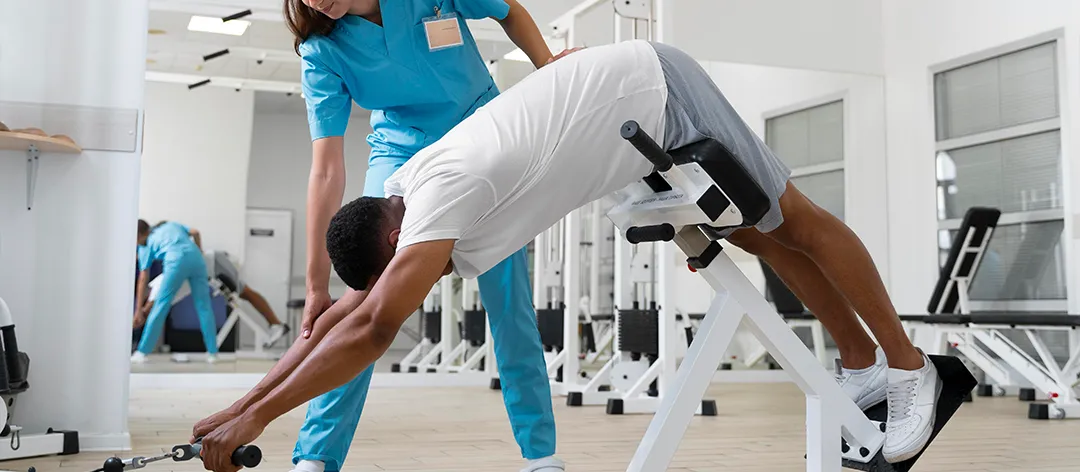
Rehabilitation and recovery planning
Patients usually begin guided mobility early, with physiotherapy that progresses from safe walking to strengthening. Discharge planning generally includes a home rehab pathway and follow-up timing.
Max Healthcare (New Delhi, Mumbai)
Spine surgeries commonly treated
Max hospitals commonly manage degenerative spine conditions, disc problems, decompression, fusion, deformity evaluation, and complex cases where multi-disciplinary planning is needed.
Technology and minimally invasive options
Across the Max network, robotic surgery platforms and advanced imaging systems are available in select facilities. Some Max centres list spine-specific robotic/navigation systems for accuracy support in complex procedures, alongside minimally invasive techniques when appropriate.
Multidisciplinary care
Max is a good fit for patients who want a highly coordinated pathway across diagnostics, surgery, ICU/step-down care (if required), pain management, and rehabilitation—especially when there are additional medical conditions to consider before surgery.
Rehabilitation and recovery planning
Rehab typically starts in hospital and continues with a phased plan after discharge. Many international patients prefer Max for structured scheduling and follow-up coordination.
Artemis Hospital (Gurugram)
Spine surgeries commonly treated
Artemis commonly treats disc herniation, stenosis (decompression procedures), spinal fusion for instability, and a range of complex spine and neuro-spine cases depending on clinical need.
Technology and minimally invasive options
Artemis highlights minimally invasive spine surgery as part of its spine offering, including “keyhole” approaches where suitable. This can support shorter early recovery phases for selected procedures.
Multidisciplinary care
Artemis is often chosen for its focused tertiary-care model—patients benefit from a coordinated pathway across spine surgery, anaesthesia, imaging, and supportive specialties, with a clear plan for inpatient recovery.
Rehabilitation and recovery planning
Patients usually receive a structured discharge plan that includes mobility milestones, physiotherapy scheduling, and clear follow-up instructions for international travel planning.
Gleneagles Hospitals (Chennai, Bengaluru, Hyderabad, Mumbai)
Spine surgeries commonly treated
Gleneagles Hospital centres commonly manage disc disease, decompression needs, fusion surgeries, spine trauma, and complex neuro-spine cases based on specialist assessment.
Technology and minimally invasive options
Gleneagles highlights advanced imaging, endoscopic systems, and intra-operative monitoring to support precision and safety during complex neuro-spine procedures. Endoscopic/minimally invasive options may be available depending on the centre and case suitability.
Multidisciplinary care
Gleneagles typically positions neuro-spine alongside neurology, neurosurgery, orthopaedics, ENT collaboration (when needed), and dedicated critical care support for post-operative monitoring.
Rehabilitation and recovery planning
Rehab planning usually begins during admission and continues after discharge with a stepwise programme. This is particularly helpful for international patients planning follow-ups before flying home.
Kokilaben Dhirubhai Ambani Hospital (Mumbai)
Spine surgeries commonly treated
Kokilaben commonly treats disc problems, stenosis, nerve compression, and complex spinal issues requiring specialist correction. Many patients shortlist this hospital for minimally invasive pathways.
Technology and minimally invasive options
Kokilaben explicitly offers endoscopic spine surgery and minimally invasive spine surgery, which uses small incisions and specialised instruments. These approaches may reduce tissue disruption and support faster early mobilisation when clinically appropriate.
Multidisciplinary care
Care is typically coordinated across orthopaedics/neurosciences, imaging, anaesthesia, and rehabilitation teams, with a strong emphasis on detailed evaluation before selecting the surgical approach.
Rehabilitation and recovery planning
Rehabilitation is structured around early mobilisation, pain control, and gradual physiotherapy progression, with discharge planning that supports continuity after international travel.
Medanta – The Medicity (Gurugram)
Spine surgeries commonly treated
Medanta is frequently chosen for complex cases, including multi-level disease, fusion planning, deformity evaluation, and cases where medical complexity benefits from broad specialist support.
Technology and minimally invasive options
Med anta’s spine programmes commonly include minimally invasive techniques where appropriate, with strong diagnostic depth and intra-operative support systems depending on the case.
Multidisciplinary care
A key reason patients choose Medanta is the single-campus, multi-specialty depth helpful when patients require coordinated input from multiple teams during pre-op optimisation and post-op monitoring.
Rehabilitation and recovery planning
Rehab typically begins early in hospital and continues with a structured programme, with follow-up planning designed to support safe return travel.
MIOT International (Chennai)
Spine surgeries commonly treated
MIOT’s orthopaedics ecosystem includes dedicated spine care for degenerative conditions, trauma, deformity evaluation, and complex cases that benefit from integrated orthopaedics + neuro support.
Technology and minimally invasive options
MIOT is widely associated with advanced diagnostics and modern operating theatres that support complex and minimally invasive surgery planning. Spine surgery is positioned within a broader orthopaedics “centre of excellence” model.
Multidisciplinary care
MIOT highlights coordinated care across specialties particularly relevant in spine cases where orthopaedics, neurosurgery/neuro-care, pain management, and medical optimisation need to work together.
Rehabilitation and recovery planning
MIOT describes a multi-disciplinary rehabilitation model (including physiotherapy and allied support), which is valuable for international patients who want a clear recovery roadmap after discharge.
Manipal Hospitals (Bengaluru, New Delhi)
Spine surgeries commonly treated
Manipal spine services commonly include microdiscectomy, decompression, fusion approaches (PLIF/TLIF/OLIF as clinically indicated), deformity correction pathways, spine trauma care, and complex reconstructions.
Technology and minimally invasive options
Manipal positions spine care as a structured speciality with minimally invasive and endoscopic options listed among services, alongside advanced planning and technique pathways.
Multidisciplinary care
Manipal explicitly describes a combined team approach spanning orthopaedics, neurosurgery, neurology, and allied specialties—useful when patients need coordinated decision-making and clear treatment explanations.
Rehabilitation and recovery planning
Manipal typically emphasises evidence-based care and stepwise rehabilitation, including early mobility guidance, physiotherapy scheduling, and long-term spine wellness planning.
Yashoda Hospitals (Hyderabad)
Spine surgeries commonly treated
Yashoda Hospital offers comprehensive spine services across degenerative spine disease, disc issues, decompression needs, fusion surgery, trauma, deformity correction, and pain management pathways.
Technology and minimally invasive options
Yashoda explicitly highlights minimally invasive spine surgery and also lists robotic-assisted spine surgery among its advanced modalities (availability varies by unit and case suitability).
Multidisciplinary care
Yashoda describes integrated services across neurology, orthopaedics, and neurosurgery—helpful for complex diagnosis, combined decision-making, and coordinated inpatient recovery.
Rehabilitation and recovery planning
Rehabilitation and follow-up planning are typically positioned as part of long-term recovery, with structured guidance for international patients preparing to travel home.
Wockhardt Hospitals (Mumbai)
Spine surgeries commonly treated
Wockhardt’s spine care commonly includes minimally invasive approaches for disc problems, decompression procedures, and other spine treatments based on diagnosis and specialist review.
Technology and minimally invasive options
Wockhardt highlights minimally invasive spine surgery, including endoscopic techniques where appropriate, supported by imaging and specialised instrumentation.
Multidisciplinary care
Spine treatment is typically coordinated within the hospital’s broader clinical services, including diagnostics, anaesthesia support, and recovery planning.
Rehabilitation and recovery planning
Patients usually receive a stepwise physiotherapy plan, discharge instructions, and follow-up scheduling, which supports continuity after international travel.

How My 1Health Makes the Journey Simple and Predictable
My 1Health supports international patients travelling to India for spine surgery by bringing everything into one pathway:
Step 1: Medical clarity before travel
We collect your reports (MRI/CT images, radiology report, prior notes), simplify the plan into plain language, and confirm the recommended procedure so you are comparing like for like options.
Step 2: Best fit hospital and surgeon matching
We match your diagnosis to the hospital that fits your clinical needs whether that means minimally invasive surgery for quicker discharge, deeper ICU support for higher medical complexity, or stronger deformity capability for complex correction.
Step 3: Transparent budgeting in writing
We request itemised treatment cost estimates, clarify what is included, and highlight the drivers that can change pricing especially implants and length of stay so your budget is realistic and complete.
Step 4: Travel and on ground logistics
We support visa guidance, flight timing suggestions aligned to your schedule, accommodation options near the hospital, and day to day movement planning so your stay is comfortable and organised.
Step 5: Aftercare that continues at home
We help ensure you leave with clear rehab instructions, medication continuity planning, and a follow up schedule so recovery remains steady after you return home.