


"I knew I wanted Apollo Children's Hospital in Chennai for Natnael. I had done my research. What I did not know was how to actually get there. My 1Health made the impossible feel like a plan.
Michael answered every question, sent me a checklist I did not know I needed, coordinated the visa, the flights, the accommodation, and was there on WhatsApp every step of the way, including the day of surgery. 3 weeks after we came home, my son ran for the first time in his life. I will never have enough words."
Mekdes Haile, Bole, Addis Ababa (alias)
Natnael was born with a hole in his heart. Nobody knew for 5 years. At a routine clinic visit in Bole, a nurse noticed a murmur. An echocardiogram confirmed it: a ventricular septal defect (VSD), moderate in size, present since birth.
His cardiologist monitored the defect. Then, at age 7, Natnael's pulmonary artery pressure rose. The window for a full recovery was still open, but surgery could no longer wait.
His mother, Mekdes Haile, had already chosen the hospital. What she needed was a way to get there. She found it through My 1Health.
Natnael had VSD closure surgery at Apollo Children's Hospital, Chennai. He returned to Addis Ababa 12 days after surgery. Three weeks later, he ran across the courtyard of their home in Bole for the first time in his life.
What Is a Hole in the Heart in a Child? VSD Explained
A ventricular septal defect (VSD), commonly called a hole in the heart, is an opening in the wall separating the heart's two lower chambers.
In a healthy heart, this wall keeps oxygen-rich blood on the left side and oxygen-poor blood on the right completely separate.
When there is a hole, the lungs receive far more blood than they are built to handle, and the heart works harder to compensate.
In children, the signs are often quiet for years. Natnael never grew at a normal rate. He tired within minutes of play. His lips turned faintly blue during exertion.
By age 6, his teachers had started keeping him inside at break time, not because they were told to, but because they noticed he could not keep up.
The complicating factor in Natnael's case was pulmonary hypertension: years of excess blood flow to the lungs raise the pressure in the lungs' blood vessels.
At the point his cardiologist recommended surgery, the pulmonary hypertension was mild to moderate. The window for a complete, lasting recovery was still open. But it was closing.
When Monitoring Becomes a Decision: Natnael's Journey
Natnael's VSD was not detected until he was 5, during a routine clinic visit in Bole where a nurse noticed a murmur.
His paediatric cardiologist confirmed the defect with an echocardiogram and explained the management approach: in some children, a moderate VSD closes on its own as the heart grows. Natnael's was larger than that. It would be monitored.
Mekdes and Dawit, Natnael's father and a structural engineer, engaged with this process actively. Every few months brought an echocardiogram, a clinic review, and a careful conversation with the cardiologist.
They had the financial resources to engage private care, and they used it. What they were really doing during those 2 years was preparing, reading, and building a complete picture of what surgery would require if and when the cardiologist gave the word.
That word came at Natnael's autumn review, when he was 7. The echocardiogram showed a rise in pulmonary artery pressure, the cardiologist's tone shifted, and what had been a monitoring conversation became a surgical one.
The defect needed to be closed before the lung pressure reached a point where the outcome of surgery would be compromised.
Fewer than 5% of children born with significant congenital heart disease in East Africa receive the surgical care they need, according to Frontiers in Pediatrics (2019).
Mekdes had already made her decision. She knew the hospital she wanted; what she needed now was someone who could make it happen.

How Ethiopian Families Start the Journey to India
Mekdes sent her first WhatsApp message to My 1Health that afternoon from her office.
Natnael's name, his age, his VSD diagnosis, the latest echocardiogram result showing the elevated pulmonary pressure, the cardiologist's recommendation, and the hospital she had already identified.
Michael, her My 1Health patient support specialist, replied within 20 minutes, and his first question was not about cost or timing but about Natnael himself.
He asked about the pulmonary pressure reading from the most recent echocardiogram, whether a cardiac catheterisation had been performed, and what the cardiologist's view was on how quickly the closure needed to happen.
Mekdes had the documents, and she knew the answers. What she needed from My 1Health was someone who could take everything she had already done- the research, the reports, the decision- and convert it into a visa, a flight, an admission, and a surgical date.
That is what Michael did.
How My 1Health Coordinated Natnael's Cardiac Surgery
Michael stayed with this family from that first WhatsApp message to the 3-month follow-up in Addis Ababa. Here is exactly what that looked like.
Reports reviewed by the paediatric cardiac MDT, not a reception desk
Michael submitted Natnael's echocardiogram reports, the private cardiologist's referral letter, his chest X-ray, and his medication history directly to the paediatric cardiac multidisciplinary team (MDT) at Apollo Children's Hospital Chennai.
A paediatric cardiac MDT is not a standard hospital admissions review. The records go to paediatric cardiologists, paediatric cardiac surgeons, paediatric cardiac anaesthesiologists, and paediatric perfusionists, all reviewing together.
This is the team that would perform and support Natnael's surgery. The review came back within 48 hours: VSD closure was indicated, the pulmonary pressure was elevated but within the surgical window, and Apollo Chennai was ready to receive him.

Treatment plan and cost estimate from Apollo Chennai
My 1Health submitted Natnael's reports to Apollo Chennai and received a detailed, paediatric-specific treatment plan. It covered:
- VSD closure under cardiopulmonary bypass
- Pre-operative cardiac catheterisation to measure pulmonary pressures precisely before surgery
- 3 nights in the dedicated paediatric cardiac ICU
- Ward recovery and monitoring
- Accommodation for Mekdes in Apollo's family facility throughout the stay
- Airport transfers in Chennai
Michael arranged a WhatsApp call with Mekdes and Dawit to go through each line of the estimate.
They asked questions about the paediatric ICU nursing ratios, about what Natnael would experience in the first 24 hours after surgery, and about what updates Dawit would receive while he remained in Addis. Four days later, they confirmed: Apollo Chennai.
My 1Health also coordinates details that carry an entirely different weight when you are a mother travelling with a child.
Michael sent a child-specific preparation note covering what the paediatric admission process at Apollo looks like, what Natnael would be told at each stage, and how the paediatric ward is structured differently from an adult one.
It was written for Mekdes, but it was also written with Natnael in mind.
Pre-travel checklist: everything Mekdes did not have to build herself
Once the decision was made, Michael sent a full pre-travel checklist compiled specifically for a parent travelling with a child for cardiac surgery in India. It covered:
- Documents required for the Indian medical visa for a child: Natnael's birth certificate, Mekdes's passport, Dawit's notarised consent letter as the non-travelling parent, and the hospital's invitation letter
- Medications Natnael was currently taking that needed to be disclosed on arrival at Apollo
- What to pack for a 12-day stay for both mother and child
- What to expect on arrival day, including the admission process and where the family accommodation was located
- A practical note on Chennai: the climate in the month they were travelling, the hospital's location adjacent to the main Apollo Greams Road campus, and what the pickup driver arrangement looked like so Mekdes could picture the arrival before she landed
That last detail mattered more than Mekdes expected. She had never left Ethiopia.
The idea of arriving in a foreign city with a 7-year-old, not knowing what to expect at the other end of the journey, was the part she was most anxious about.
Michael's description of Chennai turned the unfamiliar into something she could prepare for.

Medical visa for a child travelling to India
Travelling to India for medical treatment with a child requires additional documentation that an adult's visa application does not.
Michael coordinated the visa invitation letter from Apollo Chennai and guided Mekdes through every requirement of the application process at no cost.
Ethiopian Airlines flies direct from Addis Ababa to Chennai 4 times per week. Flight time: 6 hours 40 minutes.
No connection, no transit. Michael booked both tickets and arranged the airport pickup at Chennai International Airport.
For a full walkthrough of the Indian medical visa process, see My 1Health's guide to applying for a medical visa to India.
Arriving in Chennai: what a mother and child found
The pickup driver was at arrivals at Chennai International Airport. It was early morning, warm and humid. Natnael had never been on a plane before. He was tired, but he was looking at everything.
Apollo Children's Hospital sits adjacent to the main Apollo Greams Road campus. It is a standalone children's facility with its own entrance, its own admission process, and its own scale, built around the reality that the patients here are children.
The paediatric international patient coordinator met them at the entrance. Natnael was admitted. Mekdes was shown to the family accommodation a few floors from the ward where her son would recover.
The surgical day: what Mekdes knew in real time
VSD closure took place on the third day after admission, following pre-operative testing and a cardiac catheterisation to measure Natnael's pulmonary pressures under controlled conditions before the operation.
The procedure closed the hole in his heart with a surgical patch under cardiopulmonary bypass, and Natnael spent the following three days in the paediatric cardiac ICU.
Michael sent Mekdes a message when Natnael went into theatre, another when he came out, and a third when he was moved from the ICU to the ward.
Dawit was in Addis and received the same messages with Mekdes's permission, which meant that although he was not in Chennai, he was not without information at any point during that surgical day.
Discharge: what went home to Addis with them
On the day of discharge, Apollo Chennai's paediatric cardiac team walked Mekdes through Natnael's full post-operative protocol: his medication schedule, activity restrictions, echocardiogram follow-up timeline, warning signs, and when to seek urgent review.
Michael coordinated sending the same protocol, formatted for Natnael's paediatrician in Addis Ababa, before mother and son landed. The paediatrician had it before the flight touched down.
We take care of everything, so you can focus on getting better
Trusted by Millions Seeking World-Class Treatment
 Instant visa letter
 Flight bookings
 Airport pickup
 Accommodation
 24/7 support
Is Apollo Chennai Right for a Child with VSD from Ethiopia?
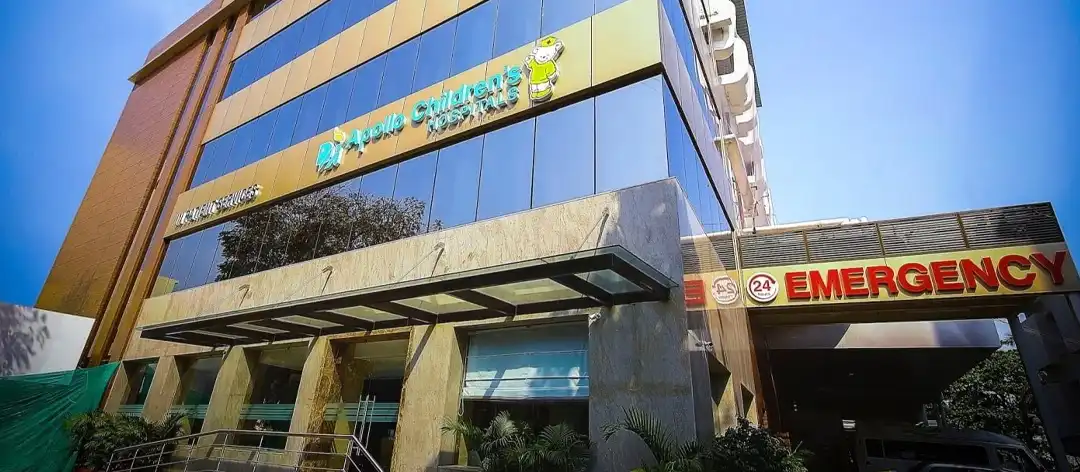
Apollo Children's Hospital Chennai was not chosen because it is a famous name. It was chosen because it is the right clinical match for a 7-year-old with VSD and secondary pulmonary hypertension.
The most important fact is structural: it is a standalone children's hospital, not a paediatric department inside an adult centre.
A facility built entirely around children, from the equipment in the operating theatres to the culture of the nursing staff.
That distinction has surgical consequences. Paediatric cardiac anaesthesia requires specialists trained specifically in children's physiology.
A 7-year-old's response to anaesthetic agents is not a scaled-down version of an adult's. Paediatric perfusionists manage the cardiopulmonary bypass circuit differently for a child.
The ICU nurses work with children in post-cardiac recovery as their primary discipline. All of this exists at Apollo Chennai in a unit built for it.
- 6,000+ paediatric cardiac surgeries since 2009
- 10,000+ paediatric cardiac interventions performed
- 4x weekly direct flights: Addis to Chennai, 6 hrs 40 mins, no transit
The department sub-specialises in pulmonary hypertension in children, directly relevant where VSD has caused secondary lung pressure changes.
The direct Ethiopian Airlines flight is not a convenience detail. For a mother travelling alone with a seriously ill 7-year-old who has never left the country, one aircraft, one landing, and one pickup driver is a meaningful reduction in risk, fatigue, and anxiety.
Honest note: Apollo Chennai is a high-volume facility. Families who want a smaller, quieter environment may find other centres better suited.
Families whose priority is clinical volume, subspecialty expertise in paediatric pulmonary hypertension, and a proven paediatric cardiac programme will find this the right match.
View the full hospital profile: Apollo Hospital on My 1Health.
For a comparison of paediatric cardiac hospitals in India, see My 1Health's guide to paediatric heart surgery hospitals in India.
The Day Natnael Ran
Mekdes and Natnael returned to Addis Ababa 12 days after surgery, with Natnael tired and quieter than usual while she carried both bags off the plane.
Three weeks later, in the courtyard outside their home in Bole, Natnael ran the way a 7-year-old is supposed to run: without thinking about it, without stopping to catch his breath, and without his lips turning blue.
Mekdes sent Michael a voice note, not a formal message but simply: "He is running. He has never run before."
He is now in school full time, his paediatrician in Addis monitors his echocardiogram protocol, and his most recent result is clear.
Dawit told Mekdes one evening that he had given Michael's number to a colleague whose daughter had been diagnosed with a similar defect, and he had not asked Mekdes first because he already knew her answer.
Can Ethiopian Families Access Child Heart Surgery in India?
The honest answer: it depends on your child's specific diagnosis and what the paediatric cardiac MDT says after reviewing the records. My 1Health cannot determine surgical eligibility before seeing the reports.
What My 1Health can confirm:
- The coordination service costs nothing. You pay the same rate as going directly to the hospital.
- Reports go to the specialist paediatric cardiac team at Apollo Chennai, the same team who will perform the procedure.
- The process works whether the first conversation is in English or Amharic. Michael coordinates language support with the hospital's international patient department.
- One dedicated specialist stays with your family from the first message to the post-surgical follow-up.
- The pre-travel checklist, the visa, the flights, the family accommodation, and the surgical day updates are all coordinated as part of the case.
VSD closure in India costs between $3,500 and $8,000 USD, depending on whether it is a catheter-based device closure or open heart surgery, the child's age and weight, and the specific hospital. My 1Health provides a specific itemised estimate from the hospital's MDT before any commitment is made.
For a broader overview of paediatric cardiac options in India, see My 1Health's guide to paediatric heart surgery hospitals in India.
You can also reach the My 1Health team at [email protected] or call +1 718 550 0880. Lines are open 24 hours a day, 7 days a week.
If you are a father, a relative, or a paediatric cardiologist researching this on behalf of a family, send a message here. The process is the same whether a parent reaches out or someone does so on their behalf.