



A second bone marrow transplant after relapse or graft failure achieves a disease-free survival rate of 72.5% at some of the best hospitals in China, compared to 20-30% in published international experience.
For patients whose first transplant has failed, that difference is the difference between options and none.
My 1Health is a global medical tourism company, partnered with hospitals in China that offer second bone marrow transplants after relapse & graft failure, connecting international patients at no cost.
We submit your reports to the hospital's transplant board, coordinate your treatment plan and cost estimate, and manage visa documentation, travel, and on-the-ground support throughout.
We take care of everything, so you can focus on getting better
Trusted by Millions Seeking World-Class Treatment
 Instant visa letter
 Flight bookings
 Airport pickup
 Accommodation
 24/7 support
This guide covers who qualifies, where in the world this is done, why China leads, and the Beijing hospitals treating international patients today.
Not sure where to start? Contact our patient support team via WhatsApp
Use this to find your hospital quickly. Full profiles follow below.
2. Beijing Jingdu Children's Hospital

Why China Is Ranked The Best Globally For Second Bone Marrow Transplants: Performs More Than Anywhere Globally
No other country performs second allogeneic HSCT at this volume, with this consistency, or with outcomes reported in data published under this level of international scrutiny.
Chinese transplant teams presented at all 4 major haematology conferences in a single cycle: ASH 2024, EHA 2025, EBMT 2025, and APBMT 2025. Eight reasons explain the gap:
1. Donor access
Haploidentical transplant means almost every patient has a half-matched family donor available.
For second transplants, switching donor type can strengthen the graft-versus-leukaemia effect, the immune response that suppresses remaining cancer.
2. CAR-T bridging
Patients with active disease often cannot proceed directly to a second transplant.
Chinese centres use CAR-T cell therapy, engineered immune cells that target cancer, to achieve deep remission first.
3. Reduced-toxicity conditioning
Conditioning, the chemotherapy given before transplant to prepare the body, is individually tailored to minimise accumulated damage from prior treatments without reducing effectiveness.
4. International peer-validated standards
In 2025, a Chinese transplant centre became the first in China to hold full EBMT membership, peer-validated recognition from the European Society for Blood and Marrow Transplantation, not self-reported.
5. Personalised post-transplant maintenance
Maintenance therapy is designed around each patient's specific disease genetics and mutation profile, targeting the exact drivers of their prior relapse.
6. Scale of the national donor registry
Combined with haploidentical access, Chinese centres offer donor options that exceed most European or North American programmes, particularly for patients from Asian, African, or mixed-heritage backgrounds.
7. Dedicated second-transplant protocols. Most Western centres treat second allo-HSCT as a one-off compassionate decision.
In China's leading programmes, it is a defined pathway. Protocols are refined with each case. Outcomes are tracked and published.
Best Hospitals in China for Second Bone Marrow Transplant: Relapse and Graft Failure
1. GoBroad Healthcare Group
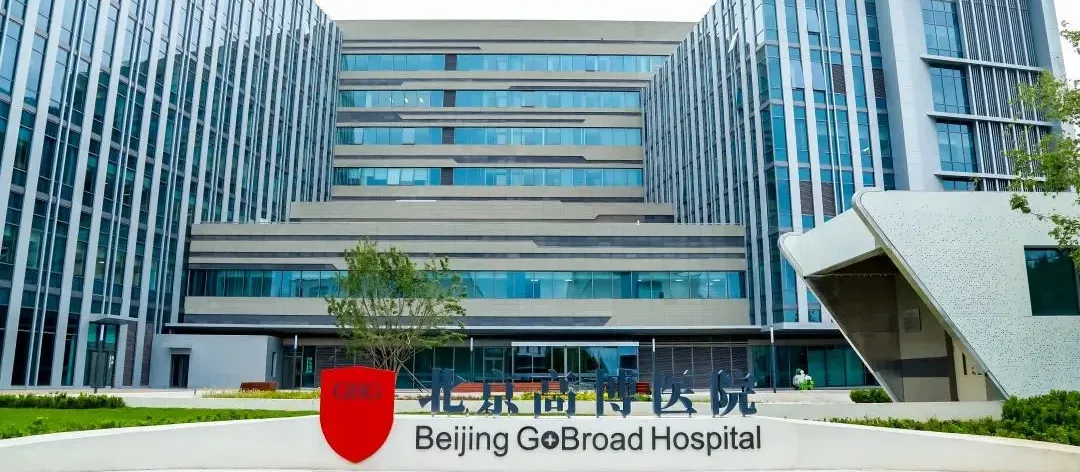
Locations: Beijing, Shanghai, Guangzhou | JCI Accredited | EBMT Member 2025
GoBroad Healthcare Group is the hospital we coordinate first for adults and children seeking a second allogeneic HSCT after relapse or graft failure.
The numbers are from publicly reported clinical studies and international conference presentations:
| Outcome | GoBroad | International Benchmark |
| Disease-free survival | 72.5% | 20-30% |
| Relapse rate | 25% | 30-40% |
| Non-relapse mortality (NRM) | 2.3% | 30-40% |
Non-relapse mortality covers deaths from complications, infections, organ failure, and graft-versus-host disease rather than the disease returning.
GoBroad's 2.3% against an international benchmark of 30-40% reflects how far their protocols have advanced the safety picture for second transplant, not just the survival rate.
Over 4,000 bone marrow transplants performed. More than 1,223 paediatric HSCTs at the Chunfu Children's Institute between July 2018 and January 2024.
Patients arrive from the UK, Nigeria, Kenya, Indonesia, and the Gulf.
Talk to a GoBroad international patient support specialist
What makes GoBroad different for second transplants:
- CAR T therapy before transplant to achieve MRD-negative remission undetectable cancer at the cellular level presented at ASH 2024 and EHA 2025
- TDH protocol (TCRαβ T cell depletion): removes immune cells responsible for graft-versus-host disease while keeping those that fight remaining cancer. Fewer GVHD complications with no loss of anti-cancer activity
- For children with relapsed ALL: CAR T followed by TDH achieved 90.1% overall survival and 9.5% cumulative relapse rate, presented at ASTCT and CIBMTR 2026
- Personalised MRD and chimerism monitoring at intervals that allow intervention before relapse becomes clinically apparent
GoBroad Protocol in Detail: The Five Steps
International patients via My 1Health: We manage accommodation near GoBroad's Beijing or Shanghai campus, language interpretation at all consultations, visa invitation letters, and airport transfers. Your coordinator is available 24/7.
2. Beijing Jingdu Children's Hospital
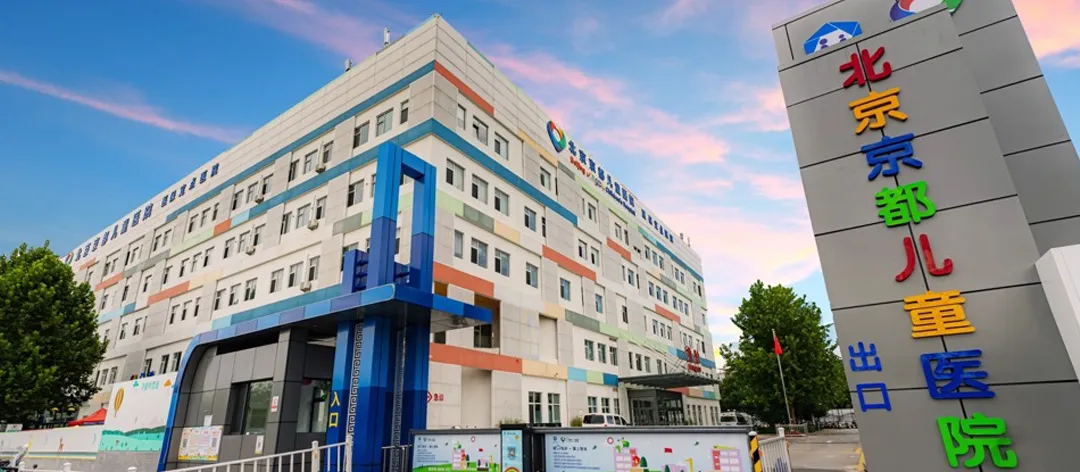
Location: Beijing, China | Paediatric Specialist | 1,280+ HSCT Procedures
Beijing Jingdu Children's Hospital is China's dedicated paediatric haematology centre. When the patient is a child, this is where we direct the case.
1,280 HSCT procedures completed. Relapsed and refractory leukaemia accounts for 45% of that volume the most clinically complex cases. Overall transplantation success rate: 78%.
Over 5 years, 340 infant leukaemia patients were treated, including children as young as 28 days old, with a 75% success rate.
For children with relapsed or refractory leukaemia receiving CAR T therapy, the objective response rate reaches 83%, with 67% achieving complete response.
These are not figures from a unit doing occasional transplants alongside other work. Jingdu is built specifically for the cases other hospitals have already tried.
Talk to a Beijing Jingdu Children's Hospital international patient support specialist
What sets Jingdu apart for paediatric second transplant cases:
- Pre-transplant disease status is one of the strongest predictors of second transplant outcomes. That level of precision is clinically significant at every decision point.
- Professor Sun Yuan, Director of the Haematology and Oncology Centre, pioneered TCRαβ+/CD45RA+ cell depletion technology in China.
- This reduced acute GVHD, the immune reaction where donor cells attack the patient's body, from 40-60% incidence to 15%, and chronic GVHD to 7%. Published in Bone Marrow Transplantation (Springer Nature).
- 19 independent laminar airflow transplantation wards are sealed, filtered environments that reduce infection risk for immunocompromised patients, including 4 dedicated to infants.
- Annual transplantation capacity: over 300 cases.
International patients via My 1Health: Accommodation in central Beijing, language interpretation, visa support, and airport transfers are coordinated from first contact through discharge.
Enquire about a second bone marrow transplant for your child at Beijing Jingdu Children's Hospital
How My 1Health Coordinates Your Second Bone Marrow Transplant in China at no Cost

My 1Health is a global medical tourism company. Since 2018, we have connected 54,000+ patients from 95+ countries to specialist hospitals across 22 countries at no cost to the patient.
The hospital covers our coordination fee. You pay exactly what you would pay going directly to GoBroad or Beijing Jingdu, the same price, confirmed in writing.
Coordination starts the moment you make contact and ends when your home haematologist has your complete medical records and follow-up plan.
Step 1: Share your reports
Send your diagnosis, scan results, blood work, and full first transplant history via secure WhatsApp.
Prior treatment history is as important as the current disease status for second transplant assessment.
Step 2: Hospital review
We forward your reports to GoBroad's or Beijing Jingdu's specialist transplant board.
Step 3: Treatment plan and cost estimate
The hospital's multidisciplinary team returns a tailored plan and cost estimate. For urgent cases, within 24-48 hours.
Step 4: Logistics:
Visa invitation letter, appointment scheduling, airport transfers, accommodation near the hospital, and language interpretation at every consultation are all coordinated before you travel.
Step 5: On-ground and post-treatment support: A dedicated coordinator is available 24/7 from first inquiry through discharge. After treatment, your full medical records transfer to your home haematologist.
Read: Leading bone marrow hospitals worldwide and getting a bone marrow transplant abroad

Second Bone Marrow Transplant Cost in China: China vs the World
A second allogeneic HSCT at GoBroad costs a fraction of the equivalent in the US, UK, or Germany, with published outcomes that exceed what most of those centres report.
| Country | Procedure Cost (USD) |
| China (GoBroad) | $40,000-$90,000 |
| India | $25,000-$55,000 |
| Turkey | $35,000-$70,000 |
| Singapore | $80,000-$150,000 |
| Germany | $120,000-$200,000 |
| UK (private) | $150,000-$250,000 |
| USA | $200,000-$400,000+ |
India sits below China on cost. Second transplant protocol depth at Indian centres does not match GoBroad's published volume or EBMT-recognised standing.
For a straightforward first transplant, India is a strong option. For relapse or graft failure cases, the clinical evidence points to China.
What the China estimate covers: conditioning chemotherapy, the transplant, and standard post-transplant monitoring.
What to budget separately:
- Pre-transplant CAR T bridging therapy (required when active residual disease is present; adds meaningful cost)
- In-country stay: minimum 8-12 weeks; complex cases may require longer
- Companion accommodation for a family member throughout
- Return visits for post-discharge follow-up
- International flights, which vary by origin
My 1Health provides a single personalised cost estimate for procedures, accommodation, airport transfers, and logistics within 48 hours of receiving your reports. No charge.

Second Bone Marrow Transplant Success Rates in China: What the Evidence Shows
| Outcome | GoBroad | Published International Benchmark |
| Disease-free survival | 72.5% | 20-30% |
| Relapse rate | 25% | 30-40% |
| Non-relapse mortality | 2.3% | 30-40% |
These figures are from publicly reported GoBroad clinical studies and presentations at ASH, EHA, EBMT, and APBMT.
Individual outcomes vary by disease type, remission status at the time of the second transplant, prior treatment history, age, organ function, and donor characteristics.
GoBroad's figures represent a consistent track record across a large, published patient series, which is a different and more meaningful claim than a single case report.
Factors that consistently improve outcomes across published second HSCT literature:
- MRD-negative remission before the transplant: no detectable cancer cells at the cellular level
- Longer interval between first and second transplant
- Younger patient age
- Preserved organ function at conditioning
- Lower cumulative prior treatment toxicity
Patients with measurable residual disease at the point of transplant face substantially higher relapse rates. This is the clinical basis for GoBroad's CAR T bridging approach.
Achieving deep remission before transplant is a direct response to what the outcomes data consistently shows.
Graft versus host disease remains a risk in any allogeneic transplant. In second transplant cases, where a different donor is often used, GVHD management becomes more complex.
GoBroad's TDH protocol depletes the T cell subpopulations responsible for GVHD while preserving NK cells, the immune cells that maintain the graft versus leukaemia effect and suppress residual cancer.

Best Countries Globally for Second Bone Marrow Transplant: Why China Leads the World
China has the world's largest haploidentical transplant programme. Haploidentical means the donor is a half-matched family member, a parent, sibling, or child, making donor access faster and broader than any other system.
China performs 5,000+ allogeneic HSCTs annually, with haploidentical transplants accounting for over 60% of that volume, according to APBMT 2022 data.
No other country comes close for second transplant cases specifically.
| Country | Cost (USD) | Key Consideration |
| China | $40,000-$90,000 | Highest volume; structured second transplant programme |
| India | $25,000-$55,000 | Established HSCT; limited second transplant depth |
| Turkey | $35,000-$70,000 | Better suited to first transplants than second |
| South Korea | $60,000-$120,000 | Strong for first transplants; limited relapse depth |
| Singapore | $80,000-$150,000 | Dedicated oncology centres; smaller programme volume |
| Germany | $120,000-$200,000 | Academic centres; clinical trial access; long wait times |
| UK | $150,000-$250,000 | Private access limited; NHS selects very few cases |
| USA | $200,000-$400,000+ | Academic excellence; cost prohibitive for most |
China's advantage is not simply volume. It is protocol depth. Managing patients who have already received a first transplant requires:
- Salvage conditioning: intensive pre-transplant chemotherapy adapted for heavily pre-treated patients
- CAR T bridging engineered immune therapy used to push the disease into remission before the transplant proceeds
- Precise donor selection for maximum anti-cancer immune response
- Personalised post-transplant maintenance
Those skills accumulate through thousands of cases, not dozens.
Find out whether a second bone marrow transplant in China is right for your case

What Happens When a First Bone Marrow Transplant Fails?
A first allogeneic bone marrow transplant replaces diseased bone marrow with a donor's healthy stem cells, giving the immune system a new start.
| RELAPSE | The cancer returns after remission. Donor cells engrafted, but residual cancer cells survived and regrew. Most relapses occur within two years (EBMT data). |
| GRAFT FAILURE | Donor cells never established. Primary: engraftment never occurred. Secondary: engraftment happened, then broke down. |
A related concern is declining donor chimerism, where the patient's own cells begin to dominate again, raising relapse risk. All three situations can be indications for a second transplant.
Who Qualifies for a Second Bone Marrow Transplant?
A second allo HSCT (allogeneic haematopoietic stem cell transplant, a procedure using donor stem cells to rebuild the immune system) is assessed case by case.
Eligibility depends on disease status, organ function, and overall fitness.
Patients considered include those with:
- Relapse after first allo HSCT: bone marrow, extramedullary (disease outside the bone marrow), or molecular (detected at genetic level before clinical symptoms appear)
- Primary or secondary graft failure
- Declining donor chimerism
- MRD positive status returning after remission (MRD measurable residual disease cancer cells detectable below the threshold standard scans would catch)
Eligible disease types:
- ALL (acute lymphoblastic leukaemia)
- AML (acute myeloid leukaemia)
- MDS (myelodysplastic syndromes)
- Lymphoblastic lymphoma
- Other haematological malignancies that relapsed or failed to engraft after a first transplant
Both children and adults are considered. The earlier the referral, the more options remain open.

Why a Second Bone Marrow Transplant Is Hard to Find Outside China
When a local hospital is evasive about a second transplant, the answer is structural, not personal.
A second allo HSCT is technically harder than a first. Patients carry cumulative toxicity from prior conditioning, salvage chemotherapy, and any infections or GVHD episodes during first transplant recovery.
Historically, non-relapse mortality ran at 30-40% in published international data.
Those numbers pushed most Western transplant programmes to treat second HSCT as a compassionate exception rather than a defined pathway.
The result: no standard protocol, no international patient pathway, low annual case volume per centre, and wait times spanning months.
A centre performing second allo HSCT regularly enough to track, publish, and refine its CAR T bridging timing, conditioning regimens, and post-transplant management builds clinical intelligence a centre doing two or three cases a year cannot reach.
That is the structural reason patients from Europe, Africa, and Southeast Asia are travelling to Beijing for a procedure their own specialist centres declined.