



South Korea has established itself as one of the most technically advanced medical destinations in the world. Its hospitals invest heavily in precision technology, its physicians train at leading institutions in the United States and Europe, and the country's healthcare system ranks consistently among the best in the Asia-Pacific region. For prostate cancer specifically, South Korea offers something that very few destinations can match: a single hospital in Seoul with six specialised treatment modalities available in-house or on-site, led by a uro-oncology team ranked second worldwide for robotic prostatectomy volume.
That hospital is Samsung Medical Center. Ranked No. 1 in Asia and No. 3 globally for cancer by Newsweek in 2026, Samsung Medical Center's prostate cancer programme spans robotic prostatectomy using the Da Vinci 5 — the most advanced robotic surgical system available — an on-site proton therapy centre, HIFU with over 20 years of programme experience, PSMA-PET staging, brachytherapy and SBRT. Every treatment on that list is available within the same cancer campus, coordinated by a multidisciplinary team and supported by a dedicated International Healthcare Centre that has been serving patients from around the world since 1995.
This article covers the full prostate cancer programme at Samsung Medical Center, the specialists leading it, what treatment costs, and what the patient journey looks like from first inquiry to returning home.
Why South Korea for Prostate Cancer Treatment
Technology Leadership Backed by Investment
South Korea consistently ranks among the world's most technologically advanced healthcare systems. Samsung Medical Center operates nine da Vinci robotic surgical systems — including the Da Vinci 5, the latest generation — and runs the only private-hospital proton therapy centre in the country. The hospital is also the first institution in Asia to achieve HIMSS Stage 7 certification across four digital healthcare categories simultaneously, a benchmark for clinical technology maturity. For patients seeking access to the most current generation of treatment technology, South Korea competes directly with the United States and the most advanced centres in Europe.
Specialists with International Training and Global Research Profiles
Samsung Medical Center's uro-oncology and radiation oncology teams hold post-graduate qualifications from, and have trained at, leading centres including Seoul National University College of Medicine, UCLA, Duke University and institutions in the United States and Europe. The hospital's oncologists appear on Clarivate's annual list of the top 1% of most-cited researchers globally, reflecting a research output that informs clinical practice. Patients are treated by active researchers, not solely clinicians.
A Complete Treatment Menu Under One Roof
One of the most significant advantages of Samsung Medical Center for prostate cancer patients is the depth of its treatment menu. Robotic prostatectomy, proton therapy, HIFU, PSMA-PET, brachytherapy and SBRT are all available within the Samsung Comprehensive Cancer Centre campus. This allows the multidisciplinary tumour board — which reviews complex cases collectively — to recommend the treatment best suited to each patient's specific disease profile, rather than being constrained by what a single department offers.
International Patient Infrastructure
Samsung Medical Center's International Healthcare Centre has been operational since September 1995 and coordinates care for patients from 132+ countries. The centre provides multilingual support, pre-travel medical record review, personalised treatment cost estimates, accommodation assistance near the hospital in Seoul's Gangnam district, and post-treatment follow-up coordination with the patient's home physician or oncologist. My1Health patient support specialists work alongside the International Healthcare Centre to provide a single point of contact throughout the journey.
Samsung Medical Center: Credentials and Cancer Programme Overview
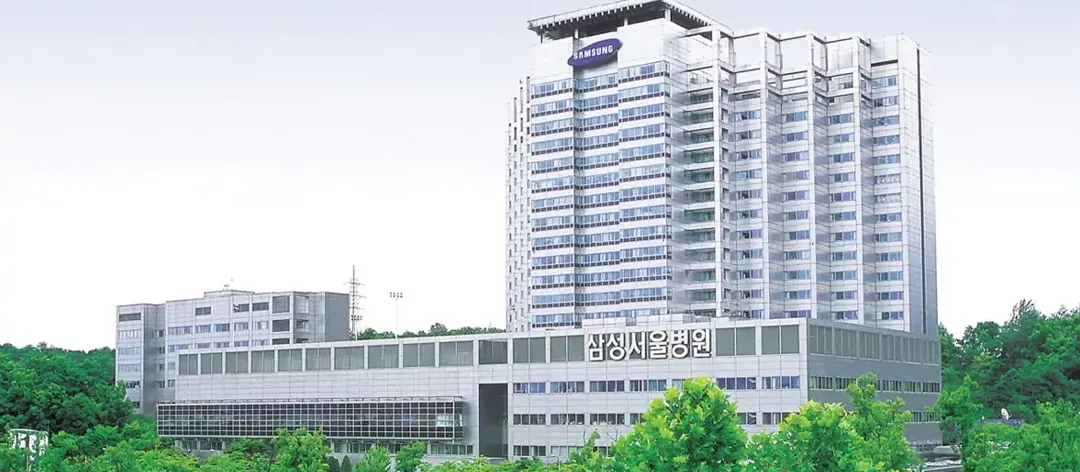
Samsung Medical Center is a tertiary university hospital founded in 1994, operating from a 200,000 square-metre campus in Gangnam-gu, Seoul. The Samsung Comprehensive Cancer Centre occupies a dedicated 11-storey building and is the largest cancer centre in Asia by several measures. It operates 655 cancer beds, treats thousands of new cancer patients annually, and houses 17 cancer-type-specific departments including a dedicated uro-oncology division for prostate, bladder and kidney cancer.
Samsung Medical Center — Key Rankings and Credentials
|
The hospital's cancer programme is not a general oncology service with a urology component — it is a full-spectrum cancer campus where prostate cancer patients are assessed by a multidisciplinary tumour board, staged with PSMA-PET, and matched to the treatment pathway most appropriate for their disease characteristics, age, comorbidities and quality-of-life priorities.
Robotic Prostatectomy: Asia's First Da Vinci 5 Procedure
Samsung Medical Center's robotic surgery programme is one of the most active in the world. In January 2024, the hospital reached 20,000 cumulative robotic surgeries — a milestone achieved with an annual growth rate exceeding 24% since 2014. In 2023 alone, approximately 3,400 robotic procedures were performed, placing Samsung Medical Center ninth in global robotic surgery volume. For prostatectomy specifically, the hospital is ranked second worldwide by procedure volume.
The Da Vinci 5: The Most Advanced Generation of Robotic Surgery
Samsung Medical Center became the first hospital in Asia to perform a procedure using the Da Vinci 5 robotic surgical system. The procedure was a prostate cancer operation, led by Prof. Seong Soo Jeon, Director of the Robotic Surgery Centre. The Da Vinci 5 offers enhanced precision compared to previous generations, with improved instrument control, force feedback capability and an immersive 3D viewer. Its ergonomic design reduces physical fatigue for the surgical team, supporting consistently precise operating conditions throughout lengthy procedures.
Prof. Seong Soo Jeon Director, Robotic Surgery Centre — Samsung Medical Center | Professor of Urology
|
Nerve-Sparing Technique and Quality-of-Life Outcomes
For patients with organ-confined prostate cancer, Samsung Medical Center's uro-oncology surgeons perform nerve-sparing robotic prostatectomy where clinically appropriate. This technique preserves the neurovascular bundles adjacent to the prostate that govern erectile function and urinary continence, prioritising quality-of-life recovery alongside cancer control. The precision enabled by the Da Vinci 5's enhanced visualisation and instrument control supports nerve identification and preservation at a level not achievable in open surgery.
- Hospital stay: typically 2 to 3 nights.
- Catheter: removed within 5 to 7 days post-operatively.
- Return to light activity: within 2 weeks for most patients.
- Full recovery timeline: 4 to 6 weeks, depending on individual factors.
On-Site Proton Therapy: The Samsung Proton Therapy Centre

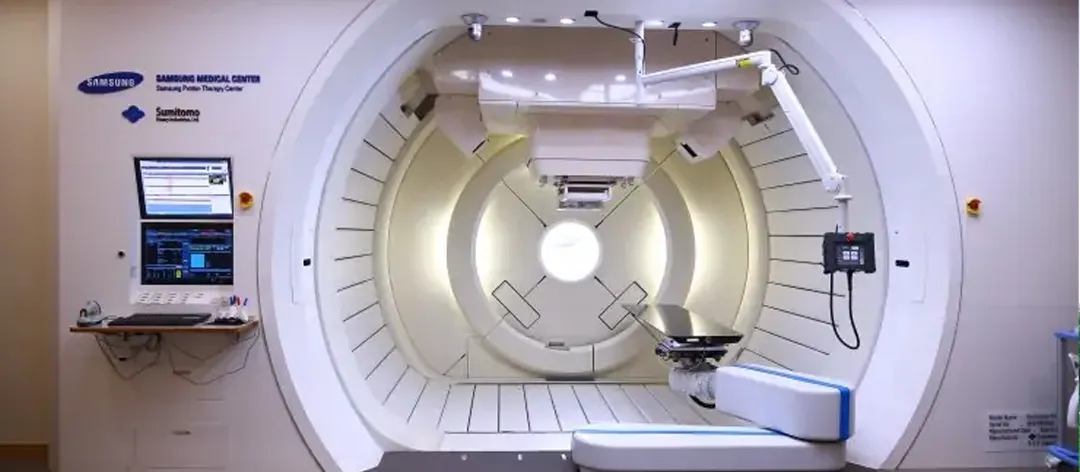
Samsung Medical Center houses the only private-hospital proton therapy centre in South Korea. The Samsung Proton Therapy Centre opened in 2015 and recently marked its 10th anniversary, having treated more than 7,000 patients from South Korea and internationally. It operates two rotating gantry rooms equipped with multi-purpose nozzles and a dedicated pencil beam scanning nozzle, capable of treating more than 480 new patients per year under standard operating conditions.
Why Proton Therapy for Prostate Cancer
Proton therapy delivers radiation using positively charged protons rather than photon beams. The key clinical advantage for prostate cancer is the Bragg peak effect: protons deposit the majority of their radiation dose precisely at the tumour depth, with minimal exit dose beyond the target. This significantly reduces radiation exposure to the bladder wall, rectum and neurovascular structures adjacent to the prostate — the structures whose inadvertent radiation exposure in conventional radiotherapy is the primary cause of post-treatment urinary, bowel and sexual side effects.
Intensity-Modulated Proton Therapy (IMPT) and Pencil Beam Scanning
The Samsung Proton Therapy Centre uses Intensity-Modulated Proton Therapy with pencil beam scanning — the most precise proton delivery technique currently available. Pencil beam scanning steers a narrow proton beam across the tumour volume layer by layer, allowing precise modulation of the dose to conform tightly to the prostate's three-dimensional shape while creating steep dose gradients at the tumour boundary. This precision is particularly valuable for patients with tumours that are anatomically close to the rectum or bladder neck, or for patients in whom preserving adjacent organ function is a clinical priority.
- Treatment is delivered on an outpatient basis — no hospitalisation required.
- Each treatment session involves approximately 30 minutes including set-up, with proton beam delivery completed in a short window per session.
- Proton therapy can be combined with hormone therapy for intermediate and high-risk disease.
- The Samsung centre also treats recurrent prostate cancer previously treated with conventional radiation, where re-irradiation with protons may be feasible when photon re-treatment is not.
For international patients, the availability of on-site proton therapy — within the same cancer campus as the uro-oncology team — removes the logistical complexity and discontinuity of care that arises when proton therapy requires referral to a separate facility. All treatment planning, on-treatment review and post-treatment follow-up are managed by a single integrated team.
HIFU: Over 20 Years of Programme Experience
High-Intensity Focused Ultrasound is available at Samsung Medical Center with over 20 years of programme experience — a depth of institutional knowledge that is significant in a modality where clinical outcomes are closely linked to procedural expertise and case volume. HIFU uses focused ultrasound waves to heat prostate tissue to temperatures that destroy cancer cells, without incisions, without radiation, and without a hospital stay.

Who HIFU Is Appropriate For
HIFU is most appropriate for men with localised, low to intermediate-risk prostate cancer — particularly those who are not candidates for surgery due to age, comorbidities or personal preference, or who wish to preserve the tissue surrounding the prostate to a degree that surgery does not permit. Focal HIFU — treating only the area of the prostate containing the tumour rather than the whole gland — has become an increasingly important treatment option for men who wish to preserve urinary and sexual function while achieving effective local cancer control.
- Outpatient procedure — no general anaesthesia required in most cases.
- No incisions, no radiation exposure, no hospital stay.
- Recovery time significantly shorter than surgery or conventional radiotherapy.
- Can be repeated if necessary or used after other failed treatments in selected cases.
- Requires a tumour visible on MRI and disease confined to the prostate.
Samsung Medical Center's HIFU programme represents one of the longest-running institutional experiences with this modality in Asia. For patients who are candidates, the combination of 20+ years of procedural experience and the broader multidisciplinary infrastructure of the Samsung cancer campus makes this an option that can be evaluated with a high degree of clinical confidence.
PSMA-PET Staging: Precision Diagnosis Before Treatment Decisions
PSMA-PET CT — Prostate-Specific Membrane Antigen Positron Emission Tomography — is available at Samsung Medical Center as part of its diagnostic and staging workup for prostate cancer. PSMA-PET is a nuclear medicine imaging technique that uses a radioactive tracer bound to a PSMA-targeting molecule to identify prostate cancer cells throughout the body with a level of sensitivity that conventional CT and bone scans cannot match.
Why PSMA-PET Changes Treatment Planning
For men with intermediate or high-risk prostate cancer, PSMA-PET staging before treatment is clinically important because it can detect lymph node involvement, pelvic spread or distant metastases that conventional imaging misses. A patient who appears to have localised prostate cancer on CT and bone scan may have micrometastatic disease visible only on PSMA-PET. Identifying this disease before committing to local treatment — surgery or radiation — can fundamentally alter the treatment recommendation, sparing the patient an ineffective procedure and directing care toward a systemic approach from the outset.
- Scan is typically completed in a single outpatient visit on arrival.
- Results are reviewed by the multidisciplinary tumour board before the treatment plan is finalised.
- PSMA-PET is also used to detect recurrence in patients with rising PSA after prior treatment.
- Available at Samsung Medical Center as part of the integrated pre-treatment workup for international patients.

Brachytherapy and SBRT / Advanced Radiotherapy
Brachytherapy — Internal Radiation for Localised Disease
Brachytherapy is available at Samsung Medical Center through the radiation oncology team within the Samsung Comprehensive Cancer Centre. The procedure involves implanting small radioactive seeds directly into the prostate gland under imaging guidance, delivering a highly concentrated radiation dose to the tumour from within while minimising exposure to surrounding tissue. Low-dose-rate brachytherapy seeds are typically left permanently in place and deliver radiation over the course of approximately one year. The procedure requires a short hospital stay and general or spinal anaesthesia.
Brachytherapy is most appropriate for low to selected intermediate-risk localised prostate cancer and is particularly well suited to patients who are not surgical candidates but prefer an internal rather than external radiation approach. It can also be combined with external beam radiotherapy as a dose-escalation strategy for intermediate and high-risk disease.
SBRT and Advanced Radiotherapy
Samsung Medical Center's advanced radiotherapy suite includes stereotactic body radiotherapy, which delivers high-dose radiation to the prostate in five sessions — significantly fewer than conventional radiotherapy courses of 37 to 39 daily fractions. SBRT achieves equivalent oncological outcomes to conventional fractionation for localised prostate cancer while dramatically reducing treatment time. This is particularly relevant for international patients who need to minimise their time in Seoul.
The radiotherapy programme at Samsung Medical Center uses advanced image-guided techniques to verify prostate position before each fraction, accounting for the natural movement of the gland between sessions. This verification step is essential for the precision required in high-dose SBRT delivery.
Cost of Prostate Cancer Treatment at Samsung Medical Center

Samsung Medical Center's treatment costs are substantially lower than equivalent care in the United States and, in most cases, below the cost of private treatment in the United Kingdom. The cost advantage is most pronounced for proton therapy — where US pricing typically ranges from $150,000 to $250,000 for a full course — and remains meaningful across robotic prostatectomy, HIFU and radiotherapy. For patients from the US, UK, Australia or the Middle East where private oncology costs are high, South Korea represents significant value without any compromise in technology or specialist quality.
| Treatment | Approx. Cost at SMC (USD) | Approx. Cost in USA (USD) | Indicative Saving |
| Robotic Prostatectomy (Da Vinci 5) | ~$14,000–$20,000 | $25,000–$45,000 | 40–65% |
| Proton Therapy (full course) | ~$20,000–$35,000 | $150,000–$250,000 | 75–90% |
| HIFU (focal or whole gland) | ~$10,000–$18,000 | $20,000–$35,000 | 40–60% |
| PSMA-PET CT Staging | ~$1,500–$2,500 | $3,000–$5,000 | 40–50% |
| Brachytherapy | ~$10,000–$15,000 | $20,000–$35,000 | 40–55% |
| SBRT / Advanced RT (full course) | ~$10,000–$16,000 | $20,000–$35,000 | 40–55% |
Costs are approximate international patient ranges based on available market data as of 2025 to 2026. Final costs depend on the specific treatment protocol, number of sessions, whether staging investigations (such as PSMA-PET CT) are required, and any combination treatments recommended by the multidisciplinary team. My1Health patient support specialists can obtain a personalised cost estimate from Samsung Medical Center based on your medical records before you commit to travel.
What Your Journey to Seoul Looks Like

Before You Travel
- My1Health submits your medical records, biopsy results and imaging to Samsung Medical Center's International Healthcare Centre for pre-travel review.
- The uro-oncology or radiation oncology team provides a written treatment recommendation and personalised cost estimate.
- My1Health assists with visa documentation requirements for patients from countries requiring a South Korean medical visa.
- Accommodation near Samsung Medical Center in Gangnam-gu is arranged. The hospital is approximately one hour from Incheon International Airport, which serves direct flights from most of Asia, the Middle East, East Africa and major hubs worldwide.
On Arrival
- PSMA-PET CT staging (if required) is typically completed on arrival day or the morning after, with results reviewed by the tumour board within 24 to 48 hours.
- Treatment start is typically within 3 to 5 days of arrival for most modalities.
- Samsung Medical Center's International Healthcare Centre provides a dedicated coordinator and multilingual support team throughout the visit.
Treatment Timelines
- Robotic prostatectomy: 2 to 3 nights in hospital; recommended total stay of 10 to 14 days before flying.
- HIFU: day procedure, same-day or next-day discharge; recommended stay of 5 to 7 days.
- SBRT: 5 sessions over 10 to 14 days; outpatient throughout; total stay of approximately 2 weeks.
- Proton therapy: treatment course of 4 to 8 weeks depending on protocol; outpatient throughout. Most patients arrange accommodation near the hospital for the treatment duration.
- Brachytherapy: 2 to 3 nights in hospital; recommended stay of 7 to 10 days.
Returning Home
- Full clinical summary, treatment records, pathology results and follow-up schedule provided before departure.
- Samsung Medical Center coordinates post-treatment communication with your GP or oncologist at home.
- My1Health remains available for any follow-up queries or coordination after your return.
Continue Reading
Overview of all advanced prostate cancer treatments abroad:
Prostate Cancer Treatment Abroad: Advanced Options That Protect Your Quality of Life
Compare all four destinations:
Robotic surgery and HIFU in Turkey:
Proton therapy at Apollo Proton Cancer Centre, India:
Prostate Cancer and Proton Therapy at Apollo Proton Cancer Centre, Chennai
Prostate cancer treatment in Singapore: